Showing posts with label kids. Show all posts

Wednesday, June 11, 2014

Professor Fiona Stanley speaks on Climate Change and Child Health


iDEA 2014: Professor Fiona Stanley speaks on Climate Change and Child Health
Published on Jun 1, 2014
Former Australian of the Year Professor Fiona Stanley speaks about the impacts of climate change on children at iDEA 2014, Doctors for the Environment Australia's national conference.

Friday, May 30, 2014

The Power of Poop: Using Humor to Inspire Kids About Climate Change

The Power of Poop: Using Humor to Inspire Kids About Climate Change
Denis Thomopoulos 05/29/2014 huffingtonpost.com

I've been a cartoonist since the day I picked up my first crayon. I was a kindergartener at Unqua Elementary in Massapequa, NY. I drew a rabbit that looked more like a jellyfish and insisted it was Bugs Bunny. There was no turning back.

Approximately a million and one drawings later, when I was a junior at Georgetown University, I drew a red hippo, named him Simon and put him on a college t-shirt. I sold a lot of shirts. As he evolved, Simon developed a sunny, wide-eyed expression that made people laugh. I'm still selling shirts.

I went on to grown-up things like graduate school and jobs in advertising, media, and entertainment. But not only did I keep drawing Simon, I soon found myself creating jungle friends for him like Peep the Bird and Billy the Zebra. Before long, I had this...


I first syndicated It's A Jungle Out There to an educational network called Lightspan, then to companies like AOL Kids, National Geographic Kids, and Paramount. The kids market became my primary niche.

Now ever since I was a kid, I've been a fan of Charles Schultz's Peanuts. I still can't get enough of poor old Charlie Brown and the Red-Haired Girl or Lucy and her psychiatry booth. Beyond the fun and games, Schultz taught me something: cartoon characters can have real-life issues. A funny comic strip can be serious too.

There are very serious issues affecting animals and the environment. My jungle characters began to speak up, and who was I to stand in their way? One of my monkeys, Yoshi, lost a sister to poaching. Peep and Simon noticed the snow on their beloved Mt. Kilimanjaro melting due to climate change. They couldn't remain silent.

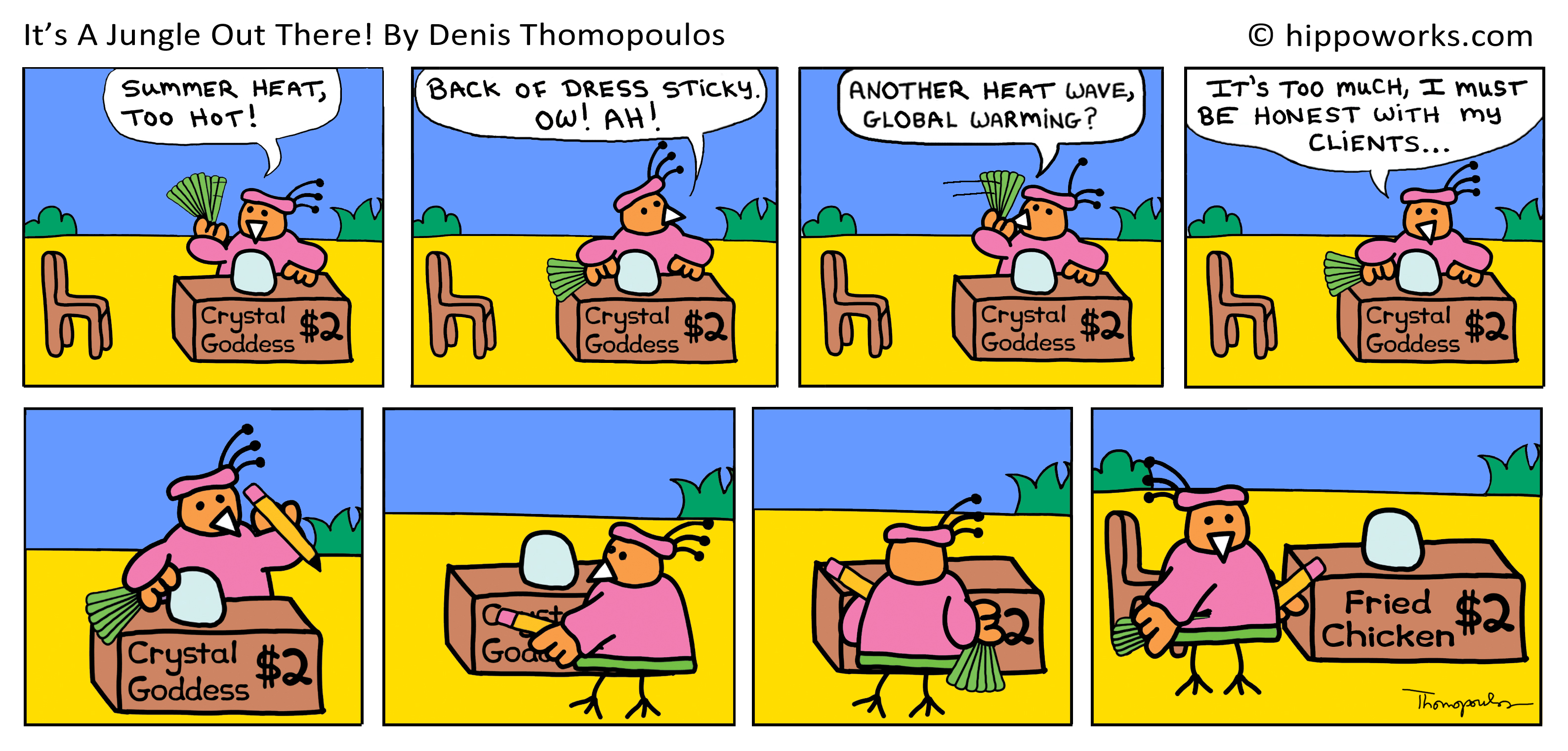
Here's a comic I drew about Suzanne, a bird and fortune teller, talking about global warming on a hot day. Note the nod to Schulz...


When cartoon characters talk about their problems, kids hear them - and discover that they can do something to help. I like to think of this as eco-tainment, part of the eco-lution process.

On hippoworks.com, a kid can enjoy an eco-themed cartoonlet and then click to help save jungle or feed an orphaned monkey. And if that eco-minded kid is then inspired to turn off the computer and go explore the great outdoors, that's an added bonus.

It's my big hope that kids will love my new half-hour cartoon musical, The Power of Poop (and other ways to save the world!). For all its poop jokes, the cartoon gives a science-based lesson on the powerful effect on climate change of methane and carbon dioxide. The music, the humor, and the jungle animals keep the fun going. Along the adventure, kids learn what they can do to make a difference. Even the little things can go a long way.

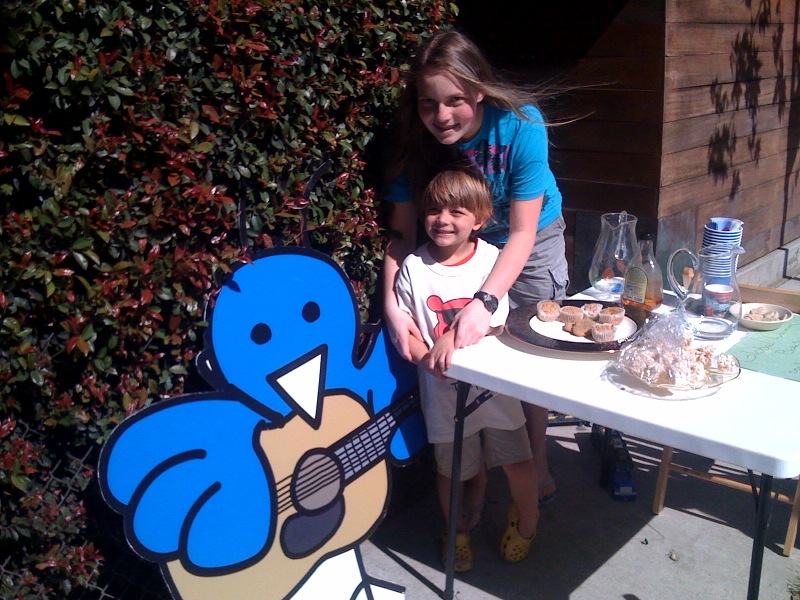
Henry, pictured below, is a kid who really loves The Power of Poop. After seeing the premiere, he was inspired to throw a climate change bake sale to save carbon-absorbing jungle (which is still disappearing at an alarming rate despite Henry's efforts). Henry and his family have raised $280 so far -- and they're just getting started!


NASA, as concerned about climate change as any federal agency, has hosted several screenings of the cartoon at their Jet Propulsion Laboratory in Pasadena, CA.

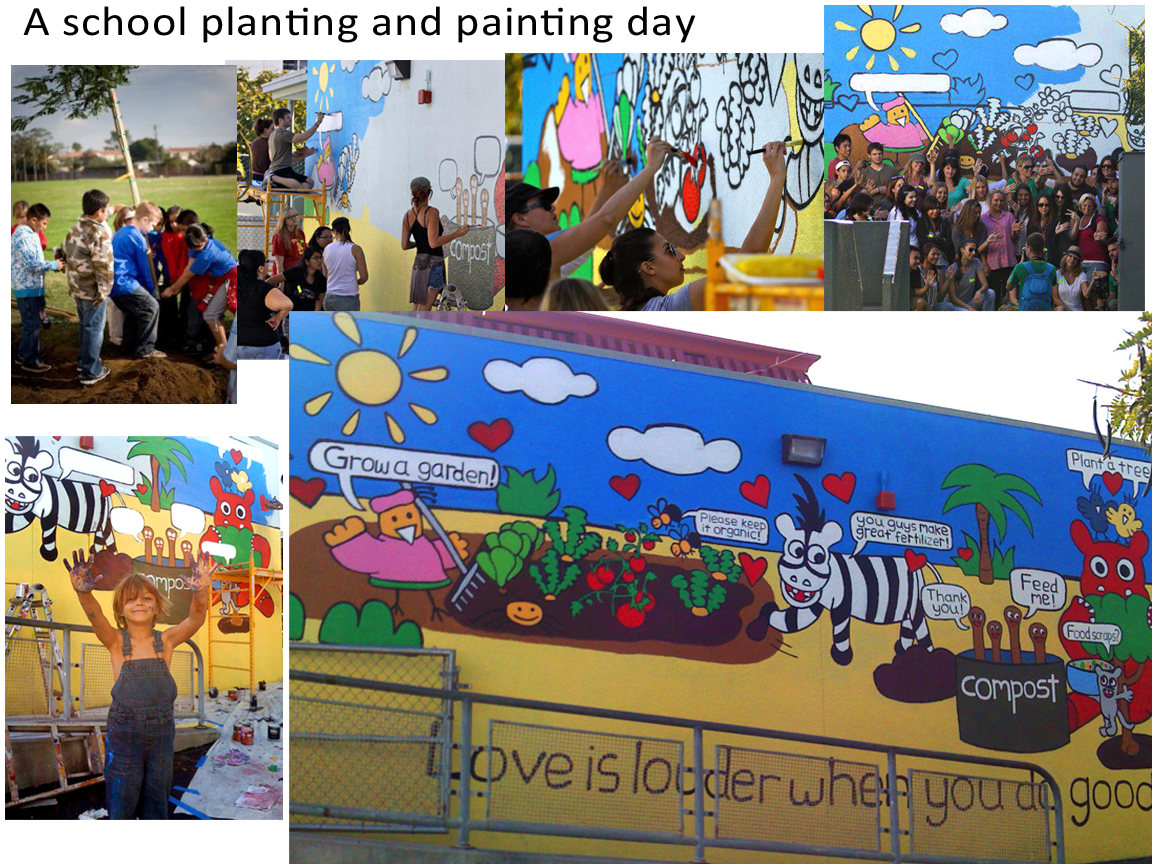
And a recent Los Angeles screening of The Power of Poop led to "A Planting and Painting Day" in Marina Del Rey where local students came together with their community to create gardens and murals featuring the story's characters.


From composting to recycling, there are all kinds of useful eco habits kids can adopt. It's my hope that The Power of Poop, for all of its playfulness, can inspire action on one of the most serious issues of our time.

Here's an eco-taining clip that explains how the power of poop effects climate change. Enjoy with your friends and family and let's preserve our incredible world for today's kids - and tomorrow's too!


Wednesday, May 14, 2014

Energy Exports Action Camp


Energy Exports Action Camp

Friends, Community Members, Activists, Paper-Wrenchers, Monkey-Wrenchers, & Revolutionaries,

Please register soon for our Energy Exports Action Camp in Central Maryland from June 2-9! We’ll be camping at a beautiful rural location (with basic amenities) from June 2-6, then moving to an urban site from June 6-9. We'll be sharing information about how extreme energy extraction and transport (fracking, coal) affects our communities, learning new skills, and planting seeds for creative connected efforts for our ongoing resistance. Each day will offer exciting workshops, panels, skillshares, three delicious meals, and lots of fun. Gather your friends and family and join us!

Exact location and other details will be sent to you once you register. Kids are welcome. We will make every effort to meet accessibility and dietary needs. Day and part-time passes are available. We love animals, but please do not bring your pets.

Registration/Questions/Interest in conducting a workshop: Find us online at energyexportsactioncamp.wordpress.com, and on Facebook at https://www.facebook.com/pages/Energy-Exports-Action-Camp-62-9/737674946277639, or email us at energyexportscamp@riseup.net

Thanks to Energy Action Coalition for the meme!

Saturday, May 3, 2014

5th Grade Climate Change Rap


5th Grade Climate Change Rap
Published on Apr 17, 2014

NZ: Young environmentalists get graphic


Generation Zero. Youth organisation Generation Zero outside Parliament, calling for political parties to show leadership on climate change.

Young environmentalists get graphic
02/05/2014

Passionate young environmentalists known for eyebrow-raising stunts have taken a simple message to Parliament: you're leading us in the wrong direction.

Generation Zero's giant painted graph unfurled at the Beehive yesterday highlighted the difference between the projected greenhouse gas emissions under the current Government and the country's potential reductions if it followed the example of Denmark.

The Danish Government has pledged to make the country independent of fossil fuels by 2050. Generation Zero wants to see a similar election promise from our political parties, spokesman Paul Young said.

"We want to see some bold leadership on this. It's also a message for the public, that it's our role as engaged citizens to be showing support for political parties to do this."

The group also launched a report yesterday aimed at politicians, emphasising the current Government policies to address climate change will only make a fraction of a difference to New Zealand's total greenhouse gas output.

Instead of pumping out 82.5 million tonnes, total Government efforts will reduce this to 82.2m tonnes – only by 0.4 per cent – by 2030, according to Ministry for the Environment estimates.

This was Generation Zero's first step in a larger project, which would see them launch a Clean Energy Plan for the country in July. The group gained notoriety in 2012 after stripping to underwear and woollies on commuter trains to protest road funding.

Climate Change minister Tim Groser was overseas and associate minister Simon Bridges was unable to be reached for comment.

Green Party climate change spokesman Kennedy Graham said rather than wishful thinking, Generation Zero's goals echoed the calls of the country's leading climatologists. "But we only have about five years to turn it around."

Graham currently has a private member's bill in the ballot, committing to reducing emissions by 88 per cent by 2050.

Labour spokeswoman Moana Mackey said dealing with climate change was often presented as too expensive to address, but it would be more costly to ignore as the burden would fall to future generations.

Massey University climate scientist Ralph Sims said the group's efforts would show the Government were risking a "public uprising" if they chose short-term goals like re-election over the long-term environmental well-being.

Thursday, March 27, 2014

NASA’s Climate Kids


NASA’s Climate Kids
climatekids.nasa.gov

NASA’s Climate Kids website brings the exciting science of climate change and sustainability to life. Targeting upper-elementary-aged children, the site is full of interactive games, hands-on activities, and engaging articles that make climate science accessible and fun. With a special section for educators, Climate Kids is great for parents and teachers as well. Find out how global changes affect our planet over time using the interactive Climate Time Machine. Follow the adventures of a quirky polar bear and monkey as they cope with climate change and humans in the animated feature “Climate Tales.” Learn about ways you can help the planet in the “green careers” section. Become a climate expert!

Climate change is going to turn the Earth into a planet of hungry kids


Climate change is going to turn the Earth into a planet of hungry kids

Ben Adler, 25 Mar 2014 grist.org

Talk of climate change-induced disasters probably brings to mind Pacific islands disappearing into the ocean, powerful storm surges, overwhelming floods, and raging wildfires. But some of the impacts — stemming in part from some of these same phenomena — will be more prosaic, but just as deadly.

Take food. A report released Monday evening by Oxfam America, an anti-poverty organization, finds that, “food prices could double by 2030, with half of this rise driven by climate change.” The result? “There could be 25 million more malnourished children under the age of 5 in 2050, compared with a world without climate change.”

We’re not talking about kids in the backseat whining that they want their chicken McNuggets posthaste. This is about already impoverished families in the world’s poorest countries that will be pushed to starvation by rising prices for their dietary staples.

Growing food is highly dependent on a delicate balance of natural conditions. Even slight shifts in average temperature or precipitation can make a now-plentiful crop unable to survive. Warmer or wetter weather can unleash crop-eating plagues such as locusts. And floods or fires can, of course, wipe out a season’s yield entirely.

Lower supplies of food means higher prices. And for the more than 3 billion people living on less than $2.50 per day, even small increases in food prices can be a matter of life and death.

We’re seeing these effects already. Oxfam writes:
Extreme floods in Pakistan in 2010 destroyed an estimated two million hectares of crops, killed 40 percent of the livestock in affected areas, and delayed the planting of winter crops, causing the price of basic foods such as rice and wheat to rocket. As a consequence, an estimated eight million people reported eating less food and less nutritious food over an extended period of time… 
Already this year there have been a number of record-breaking weather events around the globe which have badly affected agriculture and the availability and affordability of food.
Other examples abound. Typhoon Haiyan decimated the Philippines’ fishing and farming industries. “In Brazil, the worst drought in a decade has ruined crops in the country’s breadbasket region,” Oxfam notes — “including the valuable coffee harvest, causing the price of coffee to shoot up by 50 percent.” (And you thought the $4 latte at your neighborhood coffee bar was already expensive.)

But it is not just extreme weather events that are causing problems. Even minor changes in rainfall or temperature can render land infertile. “Millions of poor people across Central America are facing hunger and destitution as a result of shifting patterns of rainfall and rising temperatures,” notes Oxfam. “In Guatemala, the total amount of rainfall is increasing, but there is significantly less rain during critical times in the crop cycle, and this is taking a heavy toll on harvests. In the last two years, small-scale producers have lost 80 percent of their maize crops because of drought.”

Oxfam is not the only organization to predict potentially catastrophic food scarcity and rising food prices. A new report in the journal Environmental Research Letters finds that increases in heat extremes at sensitive times for crops could lead to major decreases in yields of staple crops such as spring wheat, maize, and soybeans. The Intergovernmental Panel on Climate Change is going to anticipate likely food price increases in its forthcoming report, according to leaked copies.

Oxfam has a few suggestions for how national governments can prepare themselves to reduce the risk of mass starvation in the inevitable event of some climate disruption. Among the group’s suggestions: Enshrine the right to food in the law, expand safety-net programs like school lunches, and assist small-scale farmers by investing in irrigation and other supports.

But adaptation has its limits, warn the report’s authors. The best thing we can do to minimize the human suffering from global warming is to minimize our greenhouse gas emissions. Otherwise, you’ll have a lot of hungry people, a lot of desperately poor fishermen and farmers, and a lot of cranky people sick of overpaying for coffee.